Layered Bathroom — Pattern, Texture, and Tonal Depth
This primary bathroom explores how pattern and material variation can create richness while maintaining visual clarity. The palette balances quiet surfaces with moments of visual activity, allowing contrast to feel measured rather than dominant.
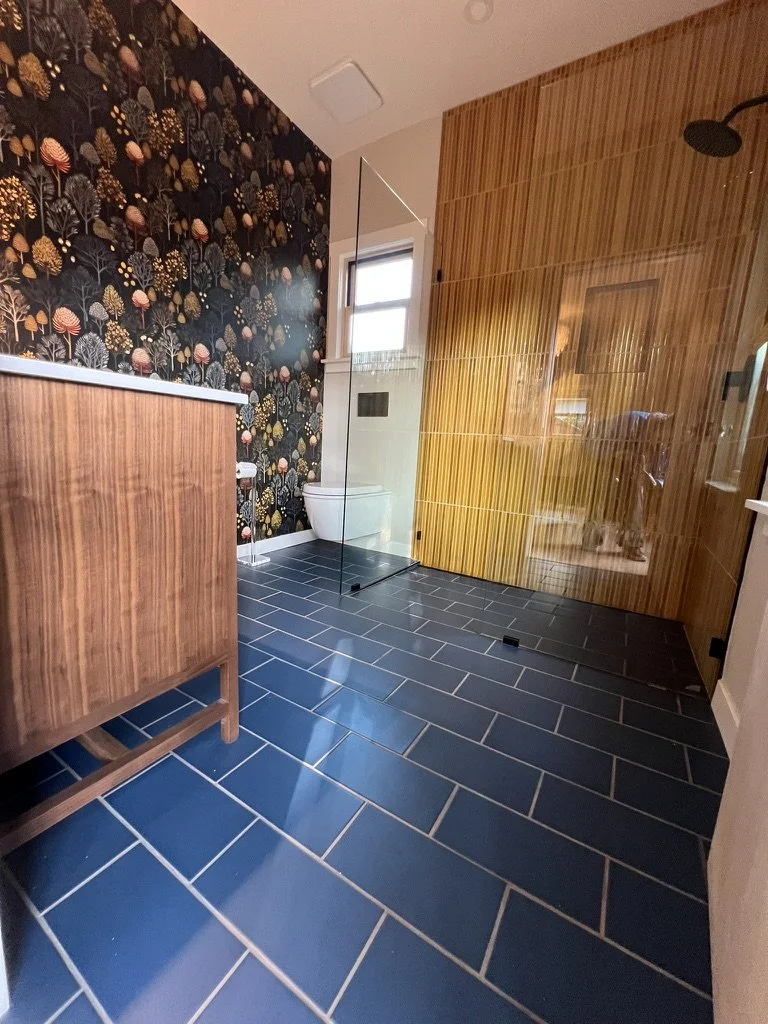
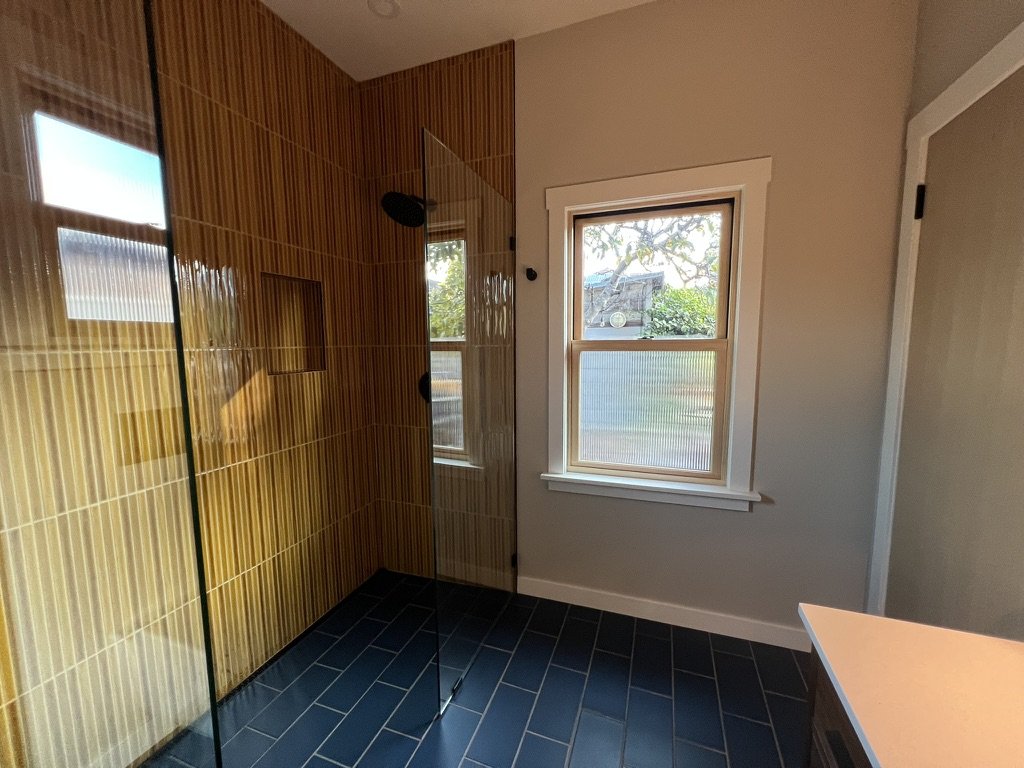
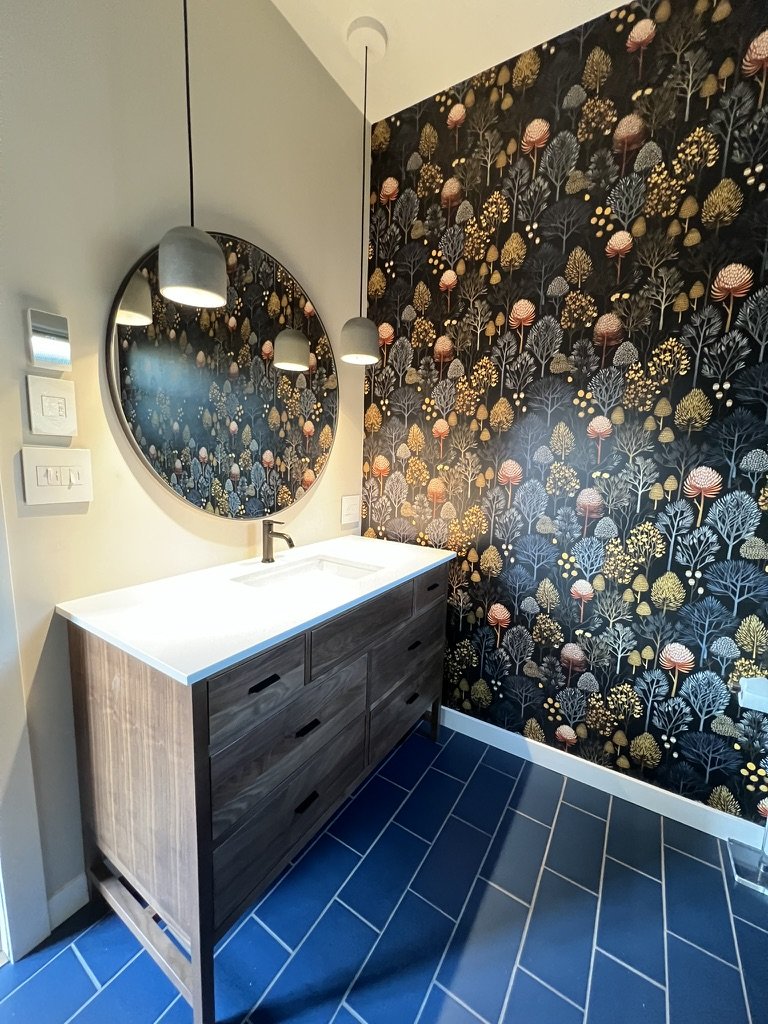
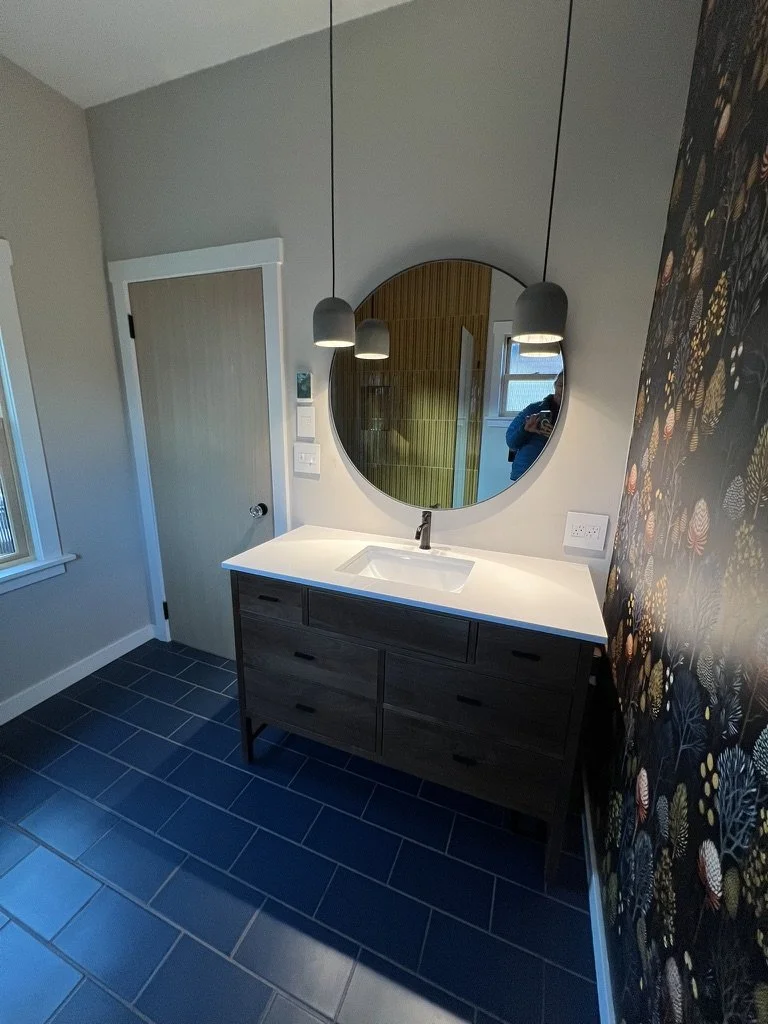
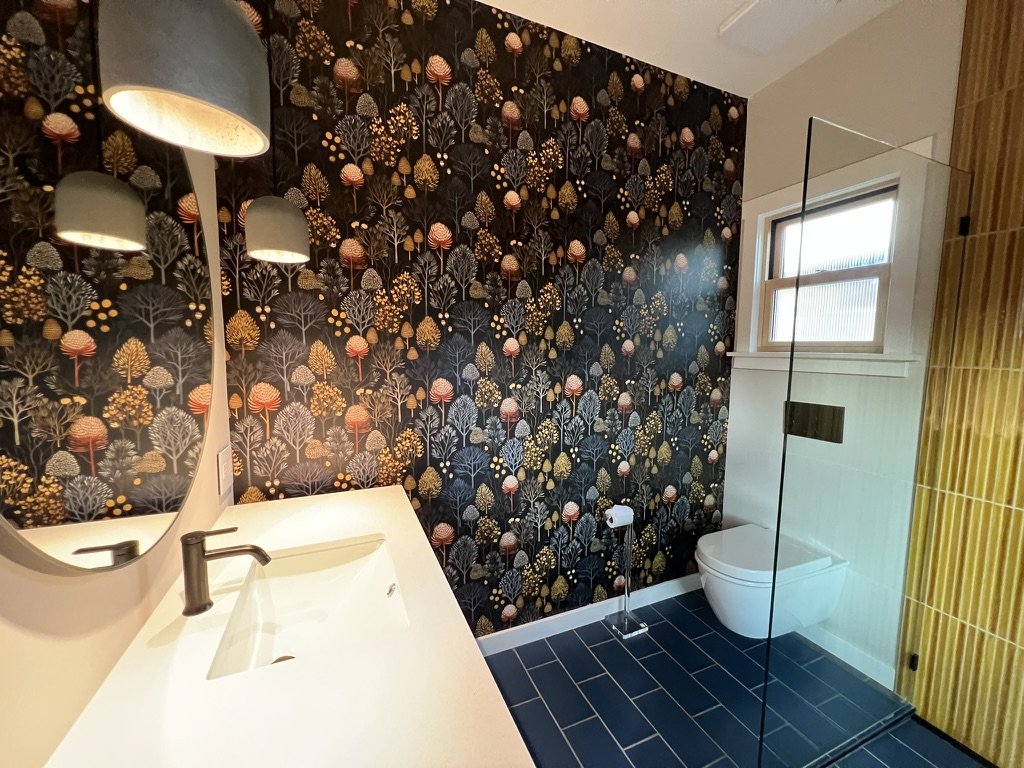
Locally produced Fireclay tile establishes a tonal foundation that relates to the broader material language of the home. Handmade Lithuanian cement pendants introduce subtle irregularity and a matte tactility that softens the geometry of the vanity wall. Grohe fixtures provide precision and restraint, offering a crisp counterpoint that keeps the composition from feeling overly ornate.
The botanical wallcovering introduces movement through pattern and scale, creating depth across the primary elevation. Its darker tonal field allows the space to feel enveloping without becoming heavy. Within the shower, orange mosaic tile introduces a shift in temperature and draws the eye upward, reinforcing vertical continuity while adding warmth to the palette.
A wall-mounted toilet maintains openness at the floor plane, allowing negative space to balance the density of pattern and surface variation. Matte and gloss finishes interact to create subtle contrast, while consistent alignment of fixtures and tile reinforces order across the room.
Rather than relying on a single focal point, the space develops through relationships between materials — pattern against quiet field, smooth surface against tactile finish, warm tone against cooler contrast. The result is a bathroom that feels layered in experience but clear in composition, where material decisions contribute to depth without excess.